
200-301 · Question #1314
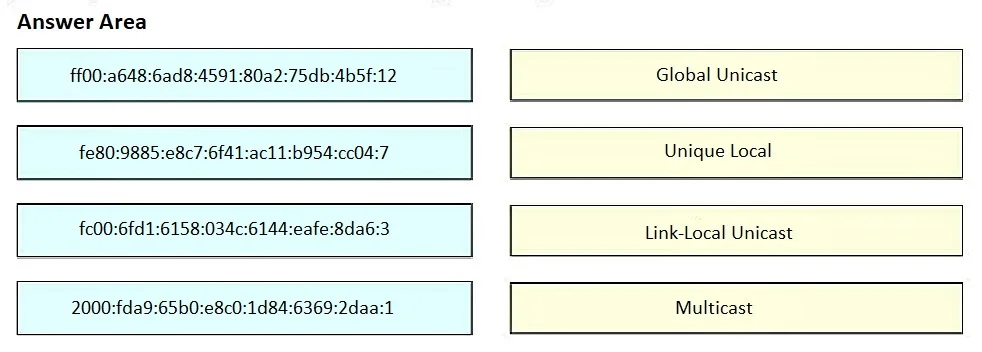
Drag and Drop Question Drag and drop the IPv6 address from the left onto the type on the right. Answer:
The correct answer is 2000:fda9:65b0:e8c0:1d84:6369:2daa:1; fc00:6fd1:6158:034c:6144:eafe:8da6:3; fe80:9885:e8c7:6f41:ac11:b954:cc04:7; ff00:a648:6ad8:4591:80a2:75db:4b5f:12. IPv6 addresses are categorized by their leading bits/prefix. The address starting with '2000' falls in the Global Unicast range (2000::/3), 'fc00' indicates Unique Local (fc00::/7), 'fe80' identifies Link-Local Unicast (fe80::/10), and 'ff00' denotes Multicast (ff00::/8). Each…
Question
Exhibit
Answer Area
Drag items
Correct arrangement
- 2000:fda9:65b0:e8c0:1d84:6369:2daa:1
- fc00:6fd1:6158:034c:6144:eafe:8da6:3
- fe80:9885:e8c7:6f41:ac11:b954:cc04:7
- ff00:a648:6ad8:4591:80a2:75db:4b5f:12
Explanation
IPv6 addresses are categorized by their leading bits/prefix. The address starting with '2000' falls in the Global Unicast range (2000::/3), 'fc00' indicates Unique Local (fc00::/7), 'fe80' identifies Link-Local Unicast (fe80::/10), and 'ff00' denotes Multicast (ff00::/8). Each prefix unambiguously maps to its address type based on the IANA IPv6 address space allocation standards.
Topics
Community Discussion
No community discussion yet for this question.