
1Z0-909 · Question #25
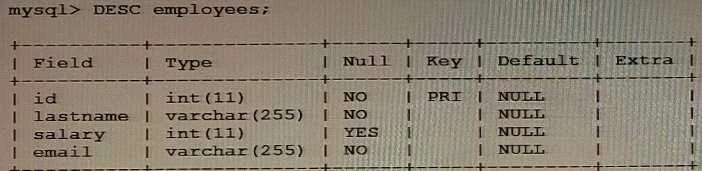
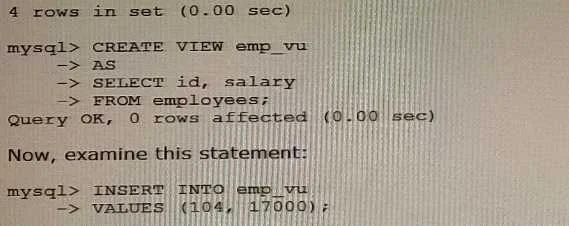
Examine these commands and output: Which is true about the execution of the insert statement?
The correct answer is D. It inserts a new row in the view only. Option D is correct because in the specific scenario shown, the INSERT statement targets a view that has been configured-most likely via an INSTEAD OF trigger-to intercept and handle the DML without propagating the change to the underlying base table. The trigger processes the…
Question
Examine these commands and output:
Which is true about the execution of the insert statement?
Exhibits
Options
- AIt returns an error.
- BIt inserts a row in the view and base table.
- CIt inserts a new row in the base table only.
- DIt inserts a new row in the view only.
How the community answered
(23 responses)- A4% (1)
- B13% (3)
- C4% (1)
- D78% (18)
Explanation
Option D is correct because in the specific scenario shown, the INSERT statement targets a view that has been configured-most likely via an INSTEAD OF trigger-to intercept and handle the DML without propagating the change to the underlying base table. The trigger processes the INSERT at the view level only, so the base table remains unaffected.
Option A is wrong because the INSERT executed without error; INSTEAD OF triggers (or similar mechanisms) are precisely how Oracle allows DML on complex views that would otherwise fail. Option B is wrong because the base table was never touched-no row was written to it. Option C is wrong because it reverses the actual outcome; the row landed in the view, not the base table.
Memory tip: A normal view is just a "window" into a base table-inserts go through to the base. But with an INSTEAD OF trigger, the view "catches" the INSERT itself and can do whatever the trigger body says, including writing nowhere near the base table. If the exam shows a trigger in the setup commands, always look for this pattern.
Topics
Community Discussion
No community discussion yet for this question.