
1Z0-908 · Question #78
Examine this query: What information does this query provide?
The correct answer is E. total memory used by connection number 10. Note: The query itself appears to be missing from your prompt, but based on the answer choices and correct answer, this is likely a MySQL Performance Schema query filtering memory usage by a specific connection ID (e.g., WHERE PROCESSLIST_ID = 10 or WHERE CONNECTION_ID = 10)…
Question
Examine this query:
What information does this query provide?
Exhibit
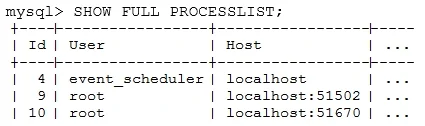
Options
- Atotal memory used across all connections associated with the user on connection number 10
- Btotal memory used by the first 10 connections
- Ctotal memory used by thread number 10
- Dtotal memory used across all connections associated with the user on thread number 10
- Etotal memory used by connection number 10
- Ftotal memory used by the first 10 threads
How the community answered
(34 responses)- A6% (2)
- C3% (1)
- E88% (30)
- F3% (1)
Explanation
Note: The query itself appears to be missing from your prompt, but based on the answer choices and correct answer, this is likely a MySQL Performance Schema query filtering memory usage by a specific connection ID (e.g., WHERE PROCESSLIST_ID = 10 or WHERE CONNECTION_ID = 10).
Option E is correct because the query targets a single, specific connection identified by the number 10 - in MySQL's Performance Schema, PROCESSLIST_ID (the connection ID) is distinct from THREAD_ID (an internal thread identifier), and filtering on the connection ID returns memory for that one connection only. Options C and D are wrong because they confuse thread number with connection number - THREAD_ID = 10 and PROCESSLIST_ID = 10 are different values in MySQL's internal model. Options A and D are wrong because aggregating memory "across all connections for a user" would require filtering by username, not by a numeric ID. Options B and F are wrong because "first 10 connections/threads" implies a LIMIT 10 clause, not a WHERE id = 10 filter.
Memory tip: Think of it this way - connection ID is what the client sees (e.g., SELECT CONNECTION_ID()), while thread ID is MySQL's internal tracking number; when a query says = 10, it means one specific thing, not a count of 10.
Topics
Community Discussion
No community discussion yet for this question.