
1Z0-908 · Question #71
You have just installed MySQL on Oracle Linux and adjusted your /etc/my.cnf parameters to suit your installation. Examine the output: What statement is true about the start attempt?
The correct answer is E. systemd attempted to start mysqld, found another systemd mysqld process running, and shut it. Option E is correct because systemd enforces single-instance service management - when it attempts to start mysqld and detects an existing systemd-managed mysqld process already running, it terminates that process before proceeding, which is reflected in the command output…
Question
You have just installed MySQL on Oracle Linux and adjusted your /etc/my.cnf parameters to suit your installation. Examine the output:
What statement is true about the start attempt?
Exhibit
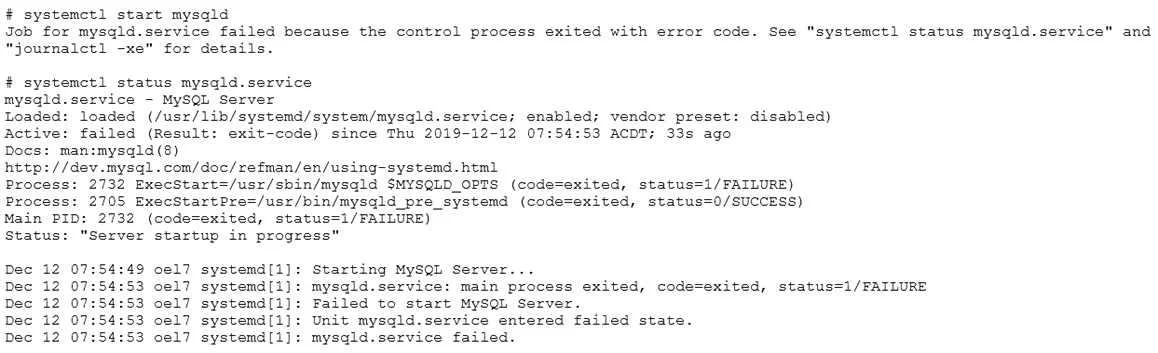
Options
- AMySQL server was not started due to a problem while executing process 2732.
- BMySQL server continued to start up even though another process existed.
- Csystemd found the mysqld service disabled and failed to start it.
- Dsystemd waited for 30 seconds before timing out and start up failed.
- Esystemd attempted to start mysqld, found another systemd mysqld process running, and shut it
How the community answered
(30 responses)- A7% (2)
- B3% (1)
- C3% (1)
- D13% (4)
- E73% (22)
Explanation
Option E is correct because systemd enforces single-instance service management - when it attempts to start mysqld and detects an existing systemd-managed mysqld process already running, it terminates that process before proceeding, which is reflected in the command output showing the duplicate being shut down.
Why the distractors are wrong:
- A is wrong because process 2732 isn't a failure point - it's the existing process that systemd found and stopped, not a crashed one.
- B is wrong because systemd does not allow a second instance to coexist; it actively resolves the conflict rather than ignoring it.
- C is wrong because a disabled service would produce a "Unit is disabled" error, not output showing process detection and shutdown activity.
- D is wrong because a 30-second timeout failure would produce a
TimeoutorFailedstate message, not a duplicate-process shutdown sequence.
Memory tip: Think of systemd as a strict bouncer - it checks the guest list before letting anyone in. If mysqld is already there (even uninvited), systemd removes the existing guest before seating the new one. One service, one seat.
Topics
Community Discussion
No community discussion yet for this question.