
Oracle
1Z0-898 · Question #59
Consider a persistence application with following entity: @Entity Public class MyEntity { @Column (name = "FIELDA_COLUMN") int fieldA; int fieldB; int fieldC; int fieldD; An orm.xml is packaged in…
Sign in or unlock 1Z0-898 to reveal the answer and full explanation for question #59. The question stem and answer options stay visible for context.
JPA Fundamentals
Question
Consider a persistence application with following entity:
@Entity Public class MyEntity { @Column (name = "FIELDA_COLUMN") int fieldA; int fieldB; int fieldC; int fieldD; An orm.xml is packaged in the application with the following contents:
Which two of following statement are true. (Choose two)
Exhibit
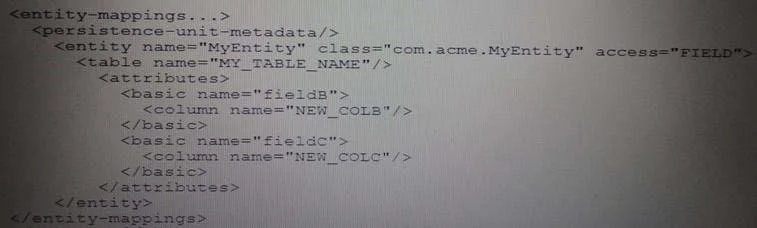
Options
- AfieldA is mapped to column FIELDA
- BfieldB is mapped to column NEW_COLB
- CfieldD is a persistent attribute of MyEntity
- DfieldD is not a persistence attribute of MyEntity
Unlock 1Z0-898 to see the answer
You've previewed enough free 1Z0-898 questions. Unlock 1Z0-898 for full answers, explanations, the timed quiz mode, progress tracking, and the master PDF. Question stem and options stay visible so you can still see what's on the exam.
Topics
#orm.xml#mapping override#@Column#persistence descriptor