
Oracle
1Z0-898 · Question #44
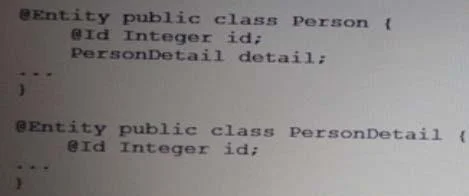
Given two entities with one to-one association: Which code fragment correctly defines the detail field that PersonDetail instance in removed if the person instance that references it is removed?
Sign in or unlock 1Z0-898 to reveal the answer and full explanation for question #44. The question stem and answer options stay visible for context.
Entity Relationships
Question
Given two entities with one to-one association:
Which code fragment correctly defines the detail field that PersonDetail instance in removed if the person instance that references it is removed?
Exhibit
Options
- A@OneToOne (optional = false)
- B@OneToOne (optional = false)
- C@ OneToOne (orphanremoval = true)
- D@ OneToOne (cascade = ORPHAN _ DELETE)
Unlock 1Z0-898 to see the answer
You've previewed enough free 1Z0-898 questions. Unlock 1Z0-898 for full answers, explanations, the timed quiz mode, progress tracking, and the master PDF. Question stem and options stay visible so you can still see what's on the exam.
Topics
#OneToOne#orphanRemoval#cascade types#entity removal