
Oracle
1Z0-898 · Question #20
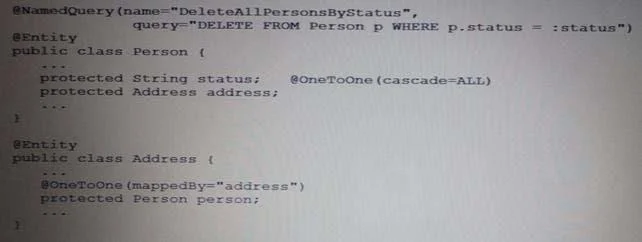
An application has two entities, parson and Address. The application calls the DeletePersonsByStatus named query. Which of the following is true?
Sign in or unlock 1Z0-898 to reveal the answer and full explanation for question #20. The question stem and answer options stay visible for context.
JPQL
Question
An application has two entities, parson and Address. The application calls the DeletePersonsByStatus named query. Which of the following is true?
Exhibit
Options
- AThe person entities are removed, but NOT their related address entities.
- BThe person entities, and all their related address entities, are removed.
- CThe DeletePersonsByStatus named query is ill-formed, and will be rejected by the persistence
- DThe named query will fall.
Unlock 1Z0-898 to see the answer
You've previewed enough free 1Z0-898 questions. Unlock 1Z0-898 for full answers, explanations, the timed quiz mode, progress tracking, and the master PDF. Question stem and options stay visible so you can still see what's on the exam.
Topics
#bulk delete#named query#cascade#JPQL delete