
Oracle
1Z0-895 · Question #29
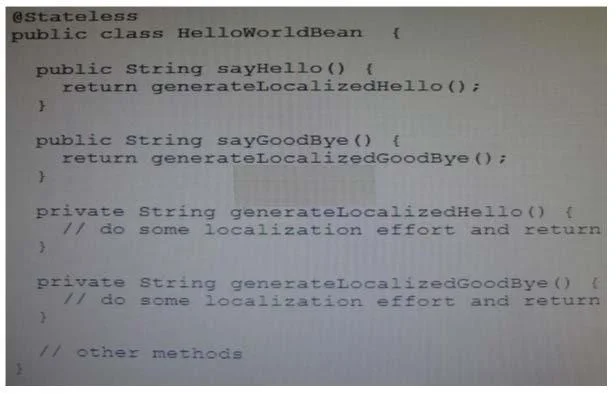
Given the following stateless session bean: How would you change the EJB to prevent multiple clients from simultaneously accessing the sayHello method of a single bean instance?
Sign in or unlock 1Z0-895 to reveal the answer and full explanation for question #29. The question stem and answer options stay visible for context.
High Availability
Question
Given the following stateless session bean: How would you change the EJB to prevent multiple clients from simultaneously accessing the sayHello method of a single bean instance?
Exhibit
Options
- AConvert sayHello into a synchronized method
- BExecute the call to generateLocalizedHello in a synchronized block
- CConvert generateLocalizehello into a synchronized method
- DConvert HelloWordBean into a singleton bean
- ENo changes are needed
Unlock 1Z0-895 to see the answer
You've previewed enough free 1Z0-895 questions. Unlock 1Z0-895 for full answers, explanations, the timed quiz mode, progress tracking, and the master PDF. Question stem and options stay visible so you can still see what's on the exam.
Topics
#singleton bean#synchronized method#thread safety#concurrent access