nerdexam
Oracle

1Z0-599 · Question #58

Identify three components of the WebLogic JMS architecture.

The correct answer is A. JMS Server B. JMS Module E. Persistent Store. The major components of the WebLogic JMS Server architecture, as illustrated in the figure (A) JMS servers that can host a defined set of modules and any associated persistent storage that reside on a WebLogic Server instance. (B) JMS modules contains configuration resources…

Configuring WebLogic Server Resources

Question

Identify three components of the WebLogic JMS architecture.

Exhibit
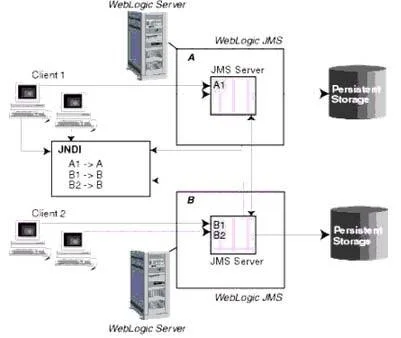
1Z0-599 question #58 exhibit

Options

  • AJMS Server
  • BJMS Module
  • CNode Manager
  • DQueue Manager
  • EPersistent Store

How the community answered

(45 responses)
  • A
    93% (42)
  • C
    2% (1)
  • D
    4% (2)

Explanation

The major components of the WebLogic JMS Server architecture, as illustrated in the figure * (A) JMS servers that can host a defined set of modules and any associated persistent storage that reside on a WebLogic Server instance. * (B) JMS modules contains configuration resources (such as queues, topics, and connections factories) and are defined by XML documents that conform to the weblogicjmsmd.xsd schema. * Client JMS applications that either produce messages to destinations or consume messages from destinations. * JNDI (Java Naming and Directory Interface), which provides a resource lookup facility. JMS resources such as connection factories and destinations are configured with a JNDI name. The runtime implementations of these resources are then bound into JNDI using the given names. * (E) WebLogic persistent storage (file store or JDBCaccessible) for storing persistent message data. The following figure illustrates the WebLogic JMS architecture.

Topics

#JMS architecture#JMS Server#JMS Module#Persistent Store

Community Discussion

No community discussion yet for this question.

Full 1Z0-599 Practice