
1Z0-146 · Question #97
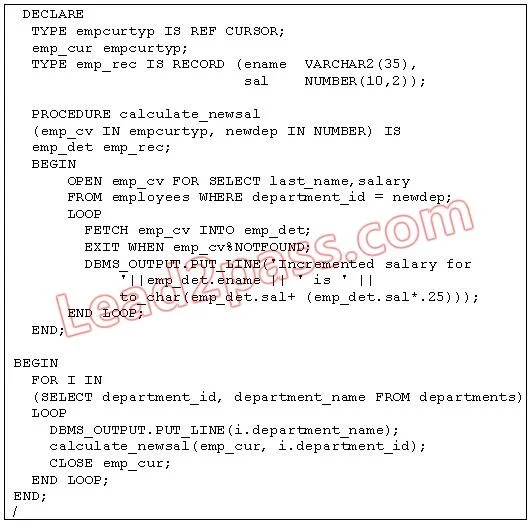
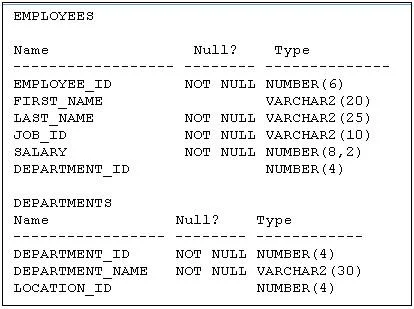
View Exhibit1 and examine the structure of the EMPLOYEES and DEPARTMENTS tables existing in your schem a. View Exhibit2 and examine the PL/SQL block that you execute to display the department-wise…
Sign in or unlock 1Z0-146 to reveal the answer and full explanation for question #97. The question stem and answer options stay visible for context.
Question
View Exhibit1 and examine the structure of the EMPLOYEES and DEPARTMENTS tables existing in your schem a. View Exhibit2 and examine the PL/SQL block that you execute to display the department-wise incremented salary for all the departments in your company. The code generates an error on execution. What correction should be done to ensure the code executes successfully?
Exhibits
Options
- AThe cursor variable parameter should be passed in IN OUT mode.
- BThe cursor variable should be defined as a strong REF CURSOR type.
- CThe cursor variable name passed as actual and formal parameters should be identical.
- DThe %NOTFOUND cursor attribute cannot be used with the cursor variables and should be replaced
Unlock 1Z0-146 to see the answer
You've previewed enough free 1Z0-146 questions. Unlock 1Z0-146 for full answers, explanations, the timed quiz mode, progress tracking, and the master PDF. Question stem and options stay visible so you can still see what's on the exam.