
1Z0-1072-20 · Question #203
You have an application deployed in Oracle Cloud Infrastructure running only in the Phoenix region. You were asked to create a disaster recovery (DR) plan that will protect against the loss of…
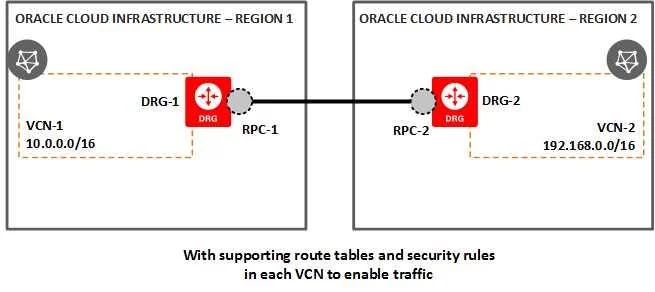
The correct answer is B. Create a new virtual cloud network (VCN) in the Phoenix region and create a subnet in one. Remote VCN peering is the process of connecting two VCNs in different regions (but the same tenancy ). The peering allows the VCNs' resources to communicate using private IP addresses without routing the traffic over the internet or through your on-premises network. Without…
Question
You have an application deployed in Oracle Cloud Infrastructure running only in the Phoenix region. You were asked to create a disaster recovery (DR) plan that will protect against the loss of critical dat
Exhibit
Options
- AThe DR site must be at least 500 miles from your primary site and data transfer between the two
- BCreate a new virtual cloud network (VCN) in the Phoenix region and create a subnet in one
- CCreate a DR environment in Ashburn. Associate a DRG with the VCN in each region and create a
- DCreate a DR environment in Ashburn and provision a FastConnect virtual circuit using DRG
- ECreate a DR environment in Ashburn. Associate a dynamic routing gateway (DRG) with the VCN
How the community answered
(57 responses)- A2% (1)
- B84% (48)
- C9% (5)
- D2% (1)
- E4% (2)
Explanation
Remote VCN peering is the process of connecting two VCNs in different regions (but the same tenancy ). The peering allows the VCNs' resources to communicate using private IP addresses without routing the traffic over the internet or through your on-premises network. Without peering, a given VCN would need an internet gateway and public IP addresses for the instances that need to communicate with another VCN in a different region. At a high level, the Networking service components required for a remote peering include: -Two VCNs with non-overlapping CIDRs, in different regions that support remote peering. The VCNs must be in the same tenancy. -A dynamic routing gateway (DRG) attached to each VCN in the peering relationship. Your VCN already has a DRG if you're using an IPSec VPN or an Oracle Cloud Infrastructure FastConnect private virtual circuit. A remote peering connection (RPC) on each DRG in the peering relationship. A connection between those two RPCs. Supporting route rules to enable traffic to flow over the connection, and only to and from select subnets in the respective VCNs (if desired). Supporting security rules to control the types of traffic allowed to and from the instances in the subnets that need to communicate with the other VCN.
Topics
Community Discussion
No community discussion yet for this question.