
Oracle
1Z0-083 · Question #76
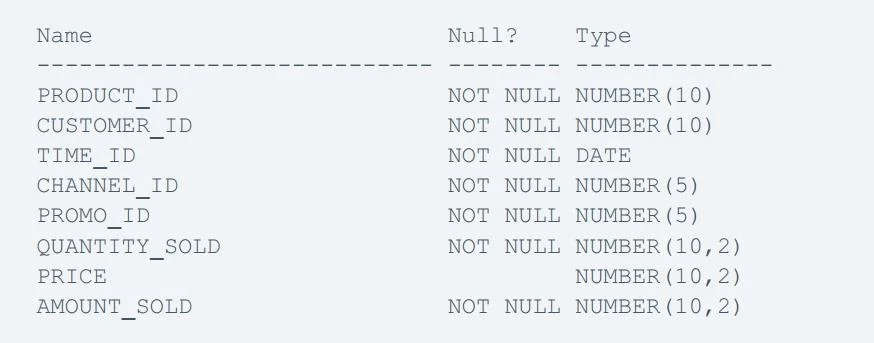
Examine the description of the SALES table: Examine this statement: CREATE TABLE mysales (prod_id, cust_id, quantity_sold, price) AS SELECT product_id, customer_id, quantity_sold, price FROM sales…
Sign in or unlock 1Z0-083 to reveal the answer and full explanation for question #76. The question stem and answer options stay visible for context.
Oracle Database Architecture
Question
Examine the description of the SALES table:
Examine this statement:
CREATE TABLE mysales (prod_id, cust_id, quantity_sold, price) AS SELECT product_id, customer_id, quantity_sold, price FROM sales WHERE 1 = 2; Which two statements are true?
Exhibit
Options
- AMYSALES is created with no rows.
- BMYSALES will have no constraints defined regardless of which constraints might be de-fined on
- CMYSALES has NOT NULL constraints on any selected columns which had that constraint in the
- DMYSALES is created with 2 rows.
- EMYSALES is created with 1 row.
Unlock 1Z0-083 to see the answer
You've previewed enough free 1Z0-083 questions. Unlock 1Z0-083 for full answers, explanations, the timed quiz mode, progress tracking, and the master PDF. Question stem and options stay visible so you can still see what's on the exam.
Topics
#CREATE TABLE AS SELECT#constraint inheritance#NOT NULL constraints#WHERE clause