nerdexam
Oracle

1Z0-071 · Question #187

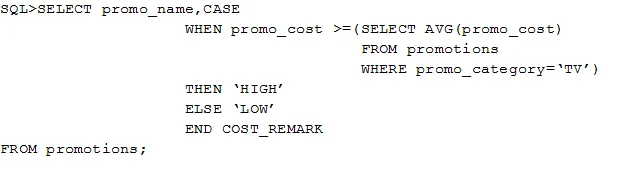
View the Exhibit and examine the structure of the PROMOTIONS table. Evaluate the following SQL statement: Which statement is true regarding the outcome of the above query?

The correct answer is C. It shows COST_REMARK for all the promos in the table. Option C is correct because the SQL query contains no WHERE clause on the outer SELECT statement, meaning every row in the PROMOTIONS table is returned and receives a COST_REMARK value - the subquery inside the CASE expression only affects the comparison value, not which rows…

Functions and Subqueries

Question

View the Exhibit and examine the structure of the PROMOTIONS table. Evaluate the following SQL statement:

Which statement is true regarding the outcome of the above query?

Exhibits
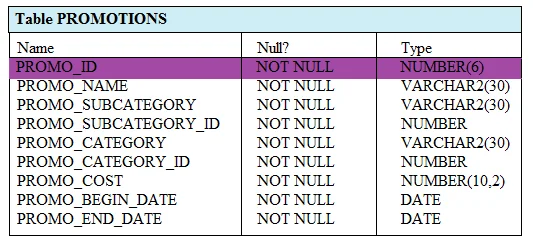
1Z0-071 question #187 exhibit 1
1Z0-071 question #187 exhibit 2

Options

  • AIt produces an error because subqueries cannot be used with the CASE expression.
  • BIt shows COST_REMARK for all the promos in the promo category `TV'.
  • CIt shows COST_REMARK for all the promos in the table.
  • DIt produces an error because the subquery gives an error.

How the community answered

(18 responses)
  • A
    17% (3)
  • B
    6% (1)
  • C
    72% (13)
  • D
    6% (1)

Explanation

Option C is correct because the SQL query contains no WHERE clause on the outer SELECT statement, meaning every row in the PROMOTIONS table is returned and receives a COST_REMARK value - the subquery inside the CASE expression only affects the comparison value, not which rows are included in the result.

Option B is the primary distractor: the subquery likely references the 'TV' category (e.g., SELECT AVG(promo_cost) FROM promotions WHERE promo_category = 'TV'), which tricks you into thinking only TV promos are shown - but a subquery inside CASE influences the logic, not the filtering of the outer query.

Option A is wrong because subqueries are perfectly valid inside CASE expressions in Oracle SQL, as long as they return a single value (scalar subquery).

Option D is wrong because a correlated or scalar subquery filtering by promo category is syntactically and logically valid - it returns one value and causes no error.

Memory tip: Always distinguish between where data comes from (the outer FROM/WHERE) and how data is labeled (the CASE expression). A subquery inside CASE is just a value lookup - it never filters the outer result set.

Topics

#CASE expressions#Subqueries in CASE#Result set logic#NULL handling

Community Discussion

No community discussion yet for this question.

Full 1Z0-071 Practice