
1Z0-061 · Question #193
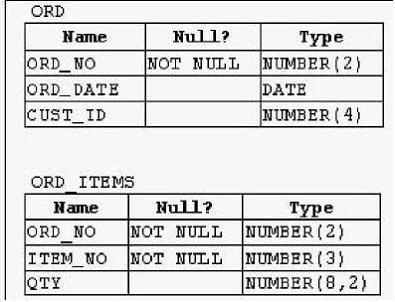
View the Exhibit and examine the structure of ORD and ORD_ITEMS tables. The ORD_NO column is PRIMARY KEY in the ORD table and the ORD_NO and ITEM_NO columns are composite PRIMARY KEY in the…
The correct answer is B. CREATE INDEX ord_idx2 C. CREATE INDEX ord_idx3. How Are Indexes Created? You can create two types of indexes. Unique index: The Oracle server automatically creates this index when you define a column in a table to have a PRIMARY KEY or a UNIQUE constraint. The name of the index is the name that is given to the constraint…
Question
View the Exhibit and examine the structure of ORD and ORD_ITEMS tables. The ORD_NO column is PRIMARY KEY in the ORD table and the ORD_NO and ITEM_NO columns are composite PRIMARY KEY in the ORD_ITEMS table. Which two CREATE INDEX statements are valid? (Choose two.)
Exhibit
Options
- ACREATE INDEX ord_idx1
- BCREATE INDEX ord_idx2
- CCREATE INDEX ord_idx3
- DCREATE INDEX ord_idx4
How the community answered
(49 responses)- A20% (10)
- B71% (35)
- D8% (4)
Explanation
How Are Indexes Created? You can create two types of indexes. Unique index: The Oracle server automatically creates this index when you define a column in a table to have a PRIMARY KEY or a UNIQUE constraint. The name of the index is the name that is given to the constraint. Nonunique index: This is an index that a user can create. For example, you can create the FOREIGN KEY column index for a join in a query to improve the speed of retrieval. Note: You can manually create a unique index, but it is recommended that you create a unique constraint, which implicitly creates a unique index.
Topics
Community Discussion
No community discussion yet for this question.