
1Z0-054 · Question #81
You observed very low cache-hit ratio in your database as shown below: SQL> SELECT (1-((phy.value-phyd.value) / (cur.value + con.value))) * 100 2 "Cache Hit ratio" 3 FROM v$sysstat cur, v$sysstat…
Sign in or unlock 1Z0-054 to reveal the answer and full explanation for question #81. The question stem and answer options stay visible for context.
Question
You observed very low cache-hit ratio in your database as shown below:
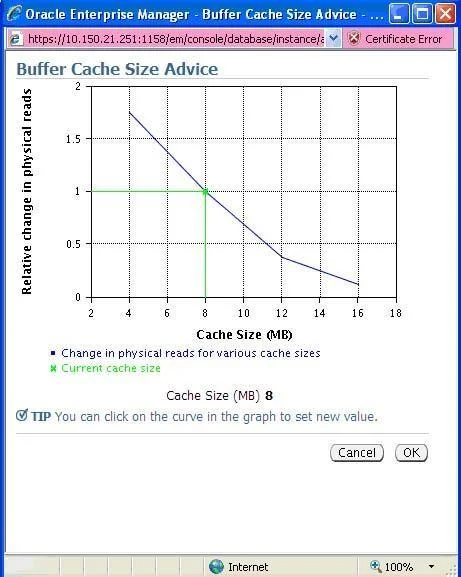
SQL> SELECT (1-((phy.value-phyd.value) / (cur.value + con.value))) * 100 2 "Cache Hit ratio" 3 FROM v$sysstat cur, v$sysstat con, v$sysstat phy, v$sysstat phyd 4 WHERE cur.name = 'db block gets' 5 AND con.name = 'consistent gets' 6 AND phy.name = 'physical reads' 7 AND phyd.name = 'physical reads direct'; Cache Hit Ratio --------------- 68.43 After further investigation, you decided to increase the database buffer cache size. You are using the Buffer Cache Advisor to check the appropriate size for the buffer cache. View the Exhibit and examine the graph shown by the advisory. What can you infer from the graph?
Exhibit
Options
- AThe buffer cache size can be set to 12 MB for optimal performance.
- BThe buffer cache size can be set to more than 16 MB to get more benefit.
- CThe buffer cache size can be set to more than 16 MB but there would be no benefit from it.
- DThe buffer cache size cannot be set to more than 16 MB because the SGA_MAX_SIZE value
Unlock 1Z0-054 to see the answer
You've previewed enough free 1Z0-054 questions. Unlock 1Z0-054 for full answers, explanations, the timed quiz mode, progress tracking, and the master PDF. Question stem and options stay visible so you can still see what's on the exam.