
1Z0-054 · Question #206
You are working on an online transaction processing (OLTP) system. The CUST table in the SH schema was populated by direct load and after that it has gone through a lot of updates and deletions. The…
Sign in or unlock 1Z0-054 to reveal the answer and full explanation for question #206. The question stem and answer options stay visible for context.
Question
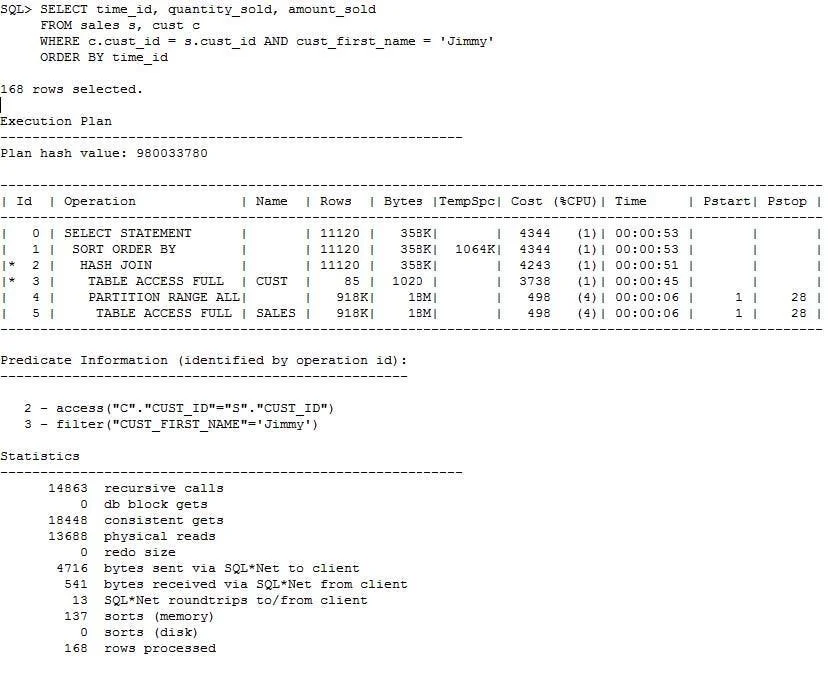
You are working on an online transaction processing (OLTP) system. The CUST table in the SH schema was populated by direct load and after that it has gone through a lot of updates and deletions. The statistics for the CUST and SALES tables were updated recently.View the Exhibit and examine the query plan.The query is performing a lot of I/O for a query that fetches only 168 rows. To investigate further, you queried the ALL_TABLES view to find out PCTUSED, PCTFREE, and the number of rows in the CUST table, as given below:
SQL> SELECT table_name ,blocks, pct_used, pct_free, num_rows 2 FROM all_tables 3* WHERE table_name = 'CUST'; TABLE_NAME BLOCKS PCT_USED PCT_FREE NUM_ROWS ---------- ---------- ---------- ---------- ---------- CUST 13768 80 111060 What would you recommend to reduce the I/O?
Exhibit
Options
- Areorganizing the table to use fewer blocks
- Brebuilding the index on the CUST_FIRST_NAME column
- Cincreasing the value for the PCTFREE attribute for the CUST table
- Dincreasing the value for the PGA_AGGREGATE_TARGET initialization parameter
Unlock 1Z0-054 to see the answer
You've previewed enough free 1Z0-054 questions. Unlock 1Z0-054 for full answers, explanations, the timed quiz mode, progress tracking, and the master PDF. Question stem and options stay visible so you can still see what's on the exam.