
1Z0-052 · Question #134
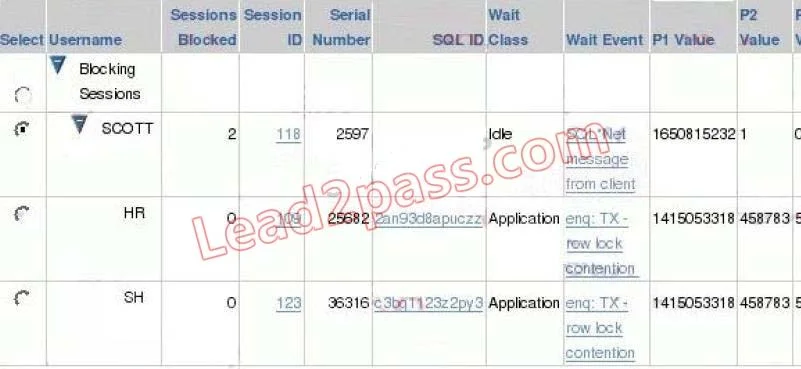
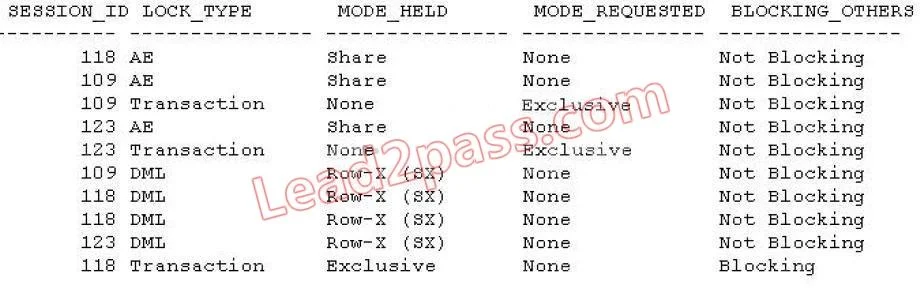
View the Exhibits and examine lock waits. Users HR and SH complain that their transactions on one of the application tables, EMP, are waiting for response. Which action would you take to release the…
The correct answer is A. Kill the session of the user SCOTT with session ID118. When one session holds a lock that blocks other sessions, the DBA must kill the blocking session to release the lock and unblock the waiters.
Question
View the Exhibits and examine lock waits. Users HR and SH complain that their transactions on one of the application tables, EMP, are waiting for response. Which action would you take to release the lock and enable users HR and SH to continue with their transactions?
Exhibits
Options
- AKill the session of the user SCOTT with session ID118.
- BIssue manual checkpoint using the ALTER SYSTEM command.
- CModify the profile used by user SCOTT to reduce the CONNECT_TIME limit.
- DFlush the Shared Pool to remove the SQL statement causing "wait" in memory.
How the community answered
(27 responses)- A74% (20)
- B4% (1)
- C7% (2)
- D15% (4)
Why each option
When one session holds a lock that blocks other sessions, the DBA must kill the blocking session to release the lock and unblock the waiters.
SCOTT's session (ID 118) holds the lock on the EMP table, preventing HR and SH from completing their transactions. Killing SCOTT's session using ALTER SYSTEM KILL SESSION immediately releases all locks held by that session, allowing the waiting transactions to acquire the lock and proceed. This is the standard and direct DBA resolution for a blocking lock situation.
A manual checkpoint flushes dirty buffers to disk and updates the control file checkpoint position, but has no effect on session-level row or table locks.
Modifying CONNECT_TIME in a profile limits the duration of future connections but does not terminate the currently active blocking session or release its held locks.
Flushing the Shared Pool invalidates cached SQL execution plans and cursors in memory, but session locks are held at a separate layer and are unaffected by this operation.
Concept tested: Killing blocking sessions to resolve Oracle lock waits
Source: https://docs.oracle.com/en/database/oracle/oracle-database/19/sqlrf/ALTER-SYSTEM.html
Topics
Community Discussion
No community discussion yet for this question.