
1Z0-047 · Question #202
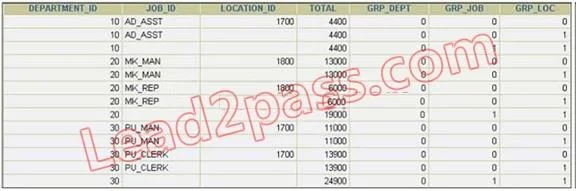
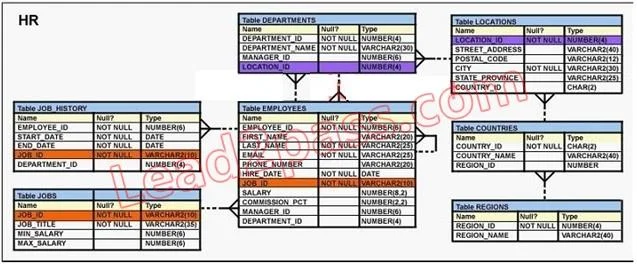
View the Exhibit and examine the descriptions of the EMPLOYEES and DEPARTMENTS tables. The following SQL statement was executed: SELECT e.department_id, e.job_id, d.location_id, sum(e.salary) total…
The correct answer is B. The value 1 in GRP_JOB and GRP_LOC means that JOB_ID and LOCATION_ID columns are not taken D. The value 0 in GRP_DEPT, GRP_JOB, and GRP_LOC means that DEPARTMENT_ID, JOB_ID, and. See the full explanation below for the reasoning.
Question
View the Exhibit and examine the descriptions of the EMPLOYEES and DEPARTMENTS tables. The following SQL statement was executed:
SELECT e.department_id, e.job_id, d.location_id, sum(e.salary) total, GROUPING(e. department_id) GRP_DEPT, GROUPING(e.job_id) GRPJOB, GROUPING(d. location_id) GRP_LOC FROM employees e JOIN departments d ON e.department_id = d.department_id GROUP BY ROLLUP (e.department_id, e.job_id, d.location_id); View the Exhibit2 and examine the output of the command. Which two statements are true regarding the output? (Choose two.)
Exhibits
Options
- AThe value 1 in GRP_LOC means that the LOCATION_ID column is taken into account to generate the
- BThe value 1 in GRP_JOB and GRP_LOC means that JOB_ID and LOCATION_ID columns are not taken
- CThe value 1 in GRP_JOB and GRP_LOC means that the NULL value in JOB_ID and LOCATION_ID
- DThe value 0 in GRP_DEPT, GRP_JOB, and GRP_LOC means that DEPARTMENT_ID, JOB_ID, and
How the community answered
(54 responses)- A7% (4)
- B76% (41)
- C17% (9)
Community Discussion
No community discussion yet for this question.