1Z0-043 · Question #103
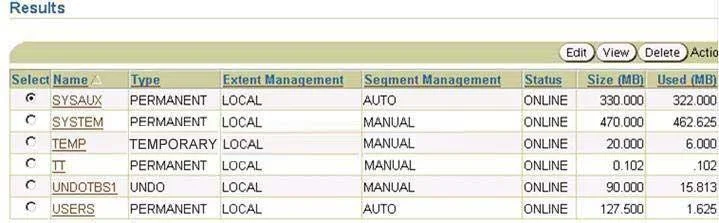
View the Exhibit and examine the characteristic of the USERS tablespace. You observe that a large volume of inserts and deletes are happening on the TRANS table in the USERS tablespace and you…
The correct answer is B. Segment Advisor. See the full explanation below for the reasoning.
Question
View the Exhibit and examine the characteristic of the USERS tablespace. You observe that a large volume of inserts and deletes are happening on the TRANS table in the USERS tablespace and you suspect that the TRANS table is fragmented. Which advisory component would you refer to, in order to find information about table fragmentation?
Exhibit
Options
- AMemory Advisor
- BSegment Advisor
- CSLQ Tuning Advisor
- DSLQ Access Advisor
- EAutomatic Database Diagnostic Monitor (ADDM)
How the community answered
(59 responses)- A14% (8)
- B75% (44)
- C7% (4)
- D2% (1)
- E3% (2)
Community Discussion
5The answer is B, Segment Advisor, and here is your sticky hook: think "S for Segment, S for Shrinkage" because the Segment Advisor is the one Oracle tool that looks inside your segments for wasted space caused by all those inserts and deletes, and it tells you exactly which objects need shrinking or reorganizing. Memory Advisor watches RAM, ADDM watches the whole database health, and the SQL advisors care about your queries, not your table's physical bloat, so none of them will touch fragmentation with a ten-foot pole.
The "S for Shrinkage" hook is solid, but just add one qualifier: Segment Advisor only recommends the shrink, you still have to run ALTER TABLE ... SHRINK SPACE yourself, or let Automatic Segment Advisor schedule it through a maintenance window task.
Saw this exact setup on my 1Z0-043 sitting, tablespace exhibit and all, and the trap is that ADDM sounds appealing because it diagnoses "everything," but the stem says fragmentation in a specific segment, so you eliminate the broad-scope tools and land straight on Segment Advisor because that is the one component built to analyze space usage and fragmentation within individual segments. Once I re-read the stem and spotted the word "table fragmentation," B was the only answer that even made sense.
Just stamp this in your brain: SA equals "Space Autopsy" because Segment Advisor cuts into that one sick segment and names the rot, while ADDM is the whole-hospital X-ray you pull when you do not even know which organ is hurting yet.
Got B right away, "segment" literally has the word for physical storage chunks where fragmentation lives.
