
1Z0-007 · Question #20
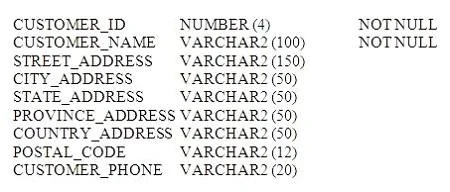
The CUSTOMERS table has these columns: The CUSTOMER_ID column is the primary key for the table. Which two statements find the number of customers? (Choose two.)
The correct answer is B. SELECT COUNT(*) D. SELECT COUNT(customer_id). These statements provide correct syntax and semantics to show the number of customers. Function COUNT() can be used with substitution symbol of all columns "*" or just with one column name. Last query will be processed a little bit faster. Incorrect Answers A: There is no…
Question
The CUSTOMERS table has these columns:
The CUSTOMER_ID column is the primary key for the table. Which two statements find the number of customers? (Choose two.)
Exhibit
Options
- ASELECT TOTAL(*)
- BSELECT COUNT(*)
- CSELECT TOTAL(customer_id)
- DSELECT COUNT(customer_id)
- ESELECT COUNT(customers)
- FSELECT TOTAL(customer_name)
How the community answered
(21 responses)- A10% (2)
- B76% (16)
- C10% (2)
- F5% (1)
Explanation
These statements provide correct syntax and semantics to show the number of customers. Function COUNT() can be used with substitution symbol of all columns "*" or just with one column name. Last query will be processed a little bit faster. Incorrect Answers A: There is no TOTAL() function in Oracle. C: There is no TOTAL() function in Oracle. E: You cannot table name as a parameter of COUNT() function. F: There is no TOTAL() function in Oracle.
Topics
Community Discussion
No community discussion yet for this question.