
1Z0-007 · Question #2
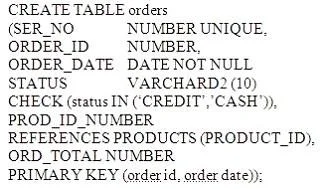
Examine the SQL statements that create ORDERS table: For which columns would an index be automatically created when you execute the above SQL statement? (Choose two)
The correct answer is A. SER_NO F. Composite index on ORDER_ID and ORDER_DATE. Indexes are created automatically by Oracle to support integrity constraints that enforce uniqueness. The two types of integrity constraints that enforce uniqueness are PRIMARY KEY and UNIQUE constraints. When the primary key or UNIQUE constraint is declared, a unique index to…
Question
Examine the SQL statements that create ORDERS table:
For which columns would an index be automatically created when you execute the above SQL statement? (Choose two)
Exhibit
Options
- ASER_NO
- BORDER_ID
- CSTATUS
- DPROD_ID
- EORD_TOTAL
- FComposite index on ORDER_ID and ORDER_DATE
How the community answered
(31 responses)- A77% (24)
- B13% (4)
- D6% (2)
- E3% (1)
Explanation
Indexes are created automatically by Oracle to support integrity constraints that enforce uniqueness. The two types of integrity constraints that enforce uniqueness are PRIMARY KEY and UNIQUE constraints. When the primary key or UNIQUE constraint is declared, a unique index to support the column's uniqueness is also created, and all values in all columns that were defined as part of the primary key or UNIQUE constraint are placed into the index. Incorrect Answers: B: There will not be index for ORDER_ID column. C: There will not be index for STATUS column. D: There will not be index for PROD_ID column. E: There will not be index for ORD_TOTAL column.
Topics
Community Discussion
No community discussion yet for this question.