
1Z0-007 · Question #147
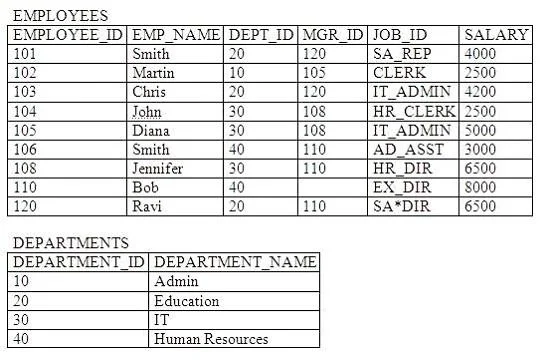
Examine the data in the EMPLOYEES and DEPARTMENTS tables: Also examine the SQL statements that create the EMPLOYEES and DEPARTMENTS tables: CREATE TABLE departments (department_id NUMBER PRIMARY…
Sign in or unlock 1Z0-007 to reveal the answer and full explanation for question #147. The question stem and answer options stay visible for context.
Question
Examine the data in the EMPLOYEES and DEPARTMENTS tables:
Also examine the SQL statements that create the EMPLOYEES and DEPARTMENTS tables:
CREATE TABLE departments (department_id NUMBER PRIMARY KEY, department_name VARCHAR2(30)); CREATE TABLE employees (EMPLOYEE_ID NUMBER PRIMARY KEY, EMP_NAME VARCHAR2(20), DEPT_ID NUMBER REFERENCES departments(department_id), MGR_ID NUMBER REFERENCES employees(employee id), MGR_ID NUMBER REFERENCES employees(employee id), JOB_ID VARCHAR2(15). SALARY NUMBER); ON the EMPLOYEES, On the EMPLOYEES table, EMPLOYEE_ID is the primary key. MGR_ID is the ID of managers and refers to the EMPLOYEE_ID. DEPT_ID is foreign key to DEPARTMENT_ID column of the DEPARTMENTS table. On the DEPARTMENTS table, DEPARTMENT_ID is the primary key. Examine this DELETE statement:
DELETE FROM departments WHERE department id = 40; What happens when you execute the DELETE statement?
Exhibit
Options
- AOnly the row with department ID 40 is deleted in the DEPARTMENTS table.
- BThe statement fails because there are child records in the EMPLOYEES table with department ID 40.
- CThe row with department ID 40 is deleted in the DEPARTMENTS table.
- DThe row with department ID 40 is deleted in the DEPARTMENTS table.
- EThe row with department ID 40 is deleted in the DEPARTMENTS table.
- FThe statement fails because there are no columns specifies in the DELETE clause of the DELETE
Unlock 1Z0-007 to see the answer
You've previewed enough free 1Z0-007 questions. Unlock 1Z0-007 for full answers, explanations, the timed quiz mode, progress tracking, and the master PDF. Question stem and options stay visible so you can still see what's on the exam.