117-300 · Question #253
What operating system tools can be used to collect capacity planning data? (Choose two.)
The correct answer is B. vmstat C. iostat. See the full explanation below for the reasoning.
Question
Exhibit
Options
- Alsmod
- Bvmstat
- Ciostat
- Dfuser
How the community answered
(29 responses)- A7% (2)
- B72% (21)
- D21% (6)
Community Discussion
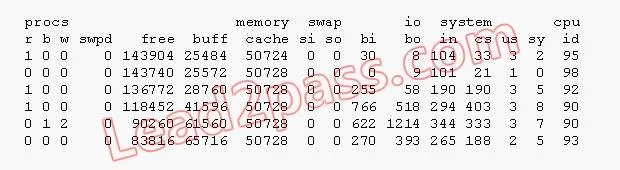
5The correct answers are B and C. vmstat reports on processes, memory, paging, block I/O, and CPU activity over time, while iostat reports CPU utilization and disk I/O statistics, and both tools give you the ongoing performance metrics you need to build a capacity baseline, whereas lsmod just lists loaded kernel modules and fuser identifies which processes are using a file or socket, neither of which feeds a capacity planning picture.
vmstat and iostat are the two you want here. vmstat gives you CPU, memory, swap, and I/O block stats over a sampling interval, and iostat breaks down per-device throughput and utilization, both of which feed directly into a capacity report. Question for you though: have you run either of these with a timed interval and count, like vmstat 5 10, to see what a baseline sample actually looks like on a live system, or are you just memorizing the names for the exam?
Solid picks, just worth noting that on Linux you will usually want sar (from sysstat) alongside those two since it aggregates historical data and lets you review a system you were not logged into during the event.
vmstat and iostat monitor live system resources, but what metric would you actually track first?
Start with CPU steal time if you are on a VM, because high steal means your hypervisor is starving you and no amount of tuning local I/O or memory will matter until you confirm the host is not the bottleneck.