
101 · Question #297
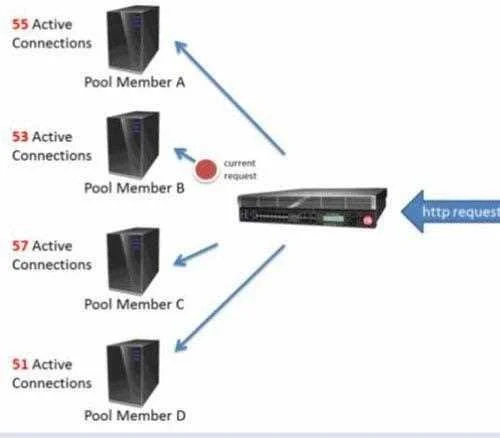
If LTM uses the least connections load balancing method, which pool member in the following diagram receives the next request?
The correct answer is B. B. With least connections load balancing, the pool member with the fewest active connections receives the next request. Based on the referenced diagram, member B holds the lowest active connection count.
Question
If LTM uses the least connections load balancing method, which pool member in the following diagram receives the next request?
Exhibit
Options
- AA
- BB
- CC
- DD
How the community answered
(31 responses)- A3% (1)
- B71% (22)
- C16% (5)
- D10% (3)
Why each option
With least connections load balancing, the pool member with the fewest active connections receives the next request. Based on the referenced diagram, member B holds the lowest active connection count.
Member A has more active connections than member B, so the least connections algorithm does not select it.
The least connections method routes each new request to the pool member currently serving the fewest active connections, ensuring more even distribution under varying workloads. In the referenced diagram, pool member B has the lowest active connection count among all members, making it the selection target. This method is particularly effective when individual requests have significantly different processing times.
Member C has more active connections than member B, disqualifying it under the least connections selection logic.
Member D has more active connections than member B, so the least connections algorithm passes it over.
Concept tested: Least connections load balancing method pool member selection
Source: https://techdocs.f5.com/en-us/bigip-16-1-0/big-ip-local-traffic-management-getting-started-with-load-balancing/load-balancing-methods.html
Topics
Community Discussion
No community discussion yet for this question.