
101 · Question #240
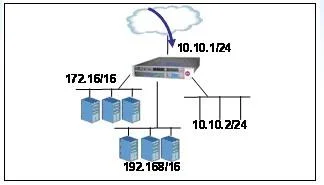
An LTM has the 3 virtual servers, 2 SNATs, four self IP addresses defined and the networks shown in the exhibit. Selected options for each object are shown below. Settings not shown are at their…
The correct answer is C. Source IP: 10.10.2.103; Destination IP: 10.10.2.102. VirtualServer2 is a transparent virtual server that does not alter the destination IP, leaving it at 10.10.2.102, while SNAT2 translates the source IP of all traffic to 10.10.2.103.
Question
An LTM has the 3 virtual servers, 2 SNATs, four self IP addresses defined and the networks shown in the exhibit. Selected options for each object are shown below. Settings not shown are at their defaults. Assume port exhaustion has not been reached. VirtualServerl Destination: 10.10.2.102:80 netmask 255.255.255.255 Pool: Pool with 3 members in the 172.1 61.16 network SNAT Automap configured V VirtualServer2 Destination: 10.10.2.102:* netmask 255.255.255.255 Transparent with 3 pool members in the 192.168/16 network VirtualServer3 Destination: 10.10.2.0:80 netmask 255.255.255.0 Type: IP Forwarding SNATI Source IP: 10.10.0.0 netmask 255.255.0.0 SNAT Address: SNAT Pool with 2 members 172.16.20.50 and 192.168.10.50 SNAT2 Source IP: All Addresses SNAT Address: 10.10.2.103 Floating Self IPs 192.168.1.1; 172.16.1.1; 10.10.2.1; 10.10.1.1 A connection attempt is made with a source IP and port of 10.20.100.50:2222 and a destination IP and port of 10.10.2.102:443. When the request is processed, what will be the source and destination IP addresses?
Exhibit
Options
- ASource IP: 10.10.2.103; Destination IP: pool member in the 192.168/16 network
- BSource IP: 10.10.201; Destination IP: pool member in the 192.168/16 network G
- CSource IP: 10.10.2.103; Destination IP: 10.10.2.102
- DThe request will be dropped.
- ESource IP: 10.20.10.50; Destination IP: pool member in the 192.168/16 network
- FSource IP: 10.10.201; Destination IP: 10.102.102
How the community answered
(62 responses)- A2% (1)
- B3% (2)
- C48% (30)
- D27% (17)
- E6% (4)
- F13% (8)
Why each option
VirtualServer2 is a transparent virtual server that does not alter the destination IP, leaving it at 10.10.2.102, while SNAT2 translates the source IP of all traffic to 10.10.2.103.
A transparent virtual server does not load-balance to pool members in the 192.168/16 network; it passes traffic to the original destination IP, so the destination cannot be a pool member address.
The source IP '10.10.201' is not a valid IPv4 address and does not match the SNAT2 translation address of 10.10.2.103, making this choice technically invalid.
A transparent virtual server on BIG-IP passes traffic through without performing destination NAT or pool member selection, so the destination address remains the original 10.10.2.102 sent by the client. SNAT2 is configured with source 'All Addresses' and SNAT address 10.10.2.103, meaning it applies to all traffic passing through the LTM and rewrites the source IP to 10.10.2.103 before forwarding, producing the source/destination pair shown in choice C.
Traffic is not dropped because VirtualServer2 matches the connection on destination 10.10.2.102:* and SNAT2 successfully applies a source translation, so processing completes without error.
The source IP 10.20.10.50 does not correspond to any configured SNAT address - SNAT2 maps all sources to 10.10.2.103, not to an address in the 10.20.x.x range.
Both IP addresses in choice F (10.10.201 and 10.102.102) are malformed octets that do not match any configured virtual server destination or SNAT translation address in the scenario.
Concept tested: BIG-IP transparent virtual server behavior combined with SNAT
Source: https://techdocs.f5.com/en-us/bigip-16-1-0/big-ip-local-traffic-management-virtual-servers/virtual-server-types.html
Topics
Community Discussion
No community discussion yet for this question.