
050-696 · Question #64
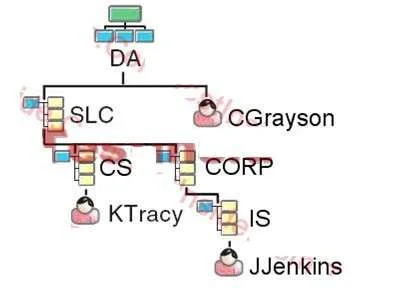
Click the Exhibit button to begin. What is the context of the JJenkins object? SLC . SLC . Novell 050-696 Exam
The correct answer is D. OU=IS.OU=CORP.OU=SLC . O=DA. The context of an eDirectory object is the full container path from the object's immediate parent up to the root Organization, excluding the object itself. Based on the exhibit, JJenkins resides in IS, which is inside CORP, which is inside SLC, within organization DA.
Question
Exhibit
Options
- AOU=IS.O=DA
- BOU= O=DA
- COU=IS.OU=SLC . O=DA
- DOU=IS.OU=CORP.OU=SLC . O=DA
- EOU=IS.OU=CORP.OU=CS.OU=SLC . O=DA
How the community answered
(40 responses)- A10% (4)
- B3% (1)
- C3% (1)
- D78% (31)
- E8% (3)
Why each option
The context of an eDirectory object is the full container path from the object's immediate parent up to the root Organization, excluding the object itself. Based on the exhibit, JJenkins resides in IS, which is inside CORP, which is inside SLC, within organization DA.
OU=IS.O=DA omits the intermediate CORP and SLC organizational units that exist between IS and the Organization DA in the tree.
OU=O=DA is a malformed context that collapses two separate container levels into one invalid string.
OU=IS.OU=SLC.O=DA skips the CORP organizational unit that sits between IS and SLC in the correct tree hierarchy.
OU=IS.OU=CORP.OU=SLC.O=DA correctly represents the full container chain holding JJenkins - the IS organizational unit nested inside CORP, which is nested inside SLC, all within the DA Organization. This matches the tree hierarchy shown in the exhibit.
OU=IS.OU=CORP.OU=CS.OU=SLC.O=DA inserts an extra CS organizational unit that does not exist in the path to JJenkins according to the exhibit.
Concept tested: eDirectory object context and distinguished naming
Source: https://www.netiq.com/documentation/edirectory-92/edir_admin/data/a2iiidg.html
Topics
Community Discussion
No community discussion yet for this question.